Drinking Water Quality in Mallorca: What You Need to Know
The water that reaches taps in Mallorca has a less straightforward origin than it might seem. Unlike mainland areas with abundant rivers and reservoirs, the island relies mainly on underground aquifers and, increasingly over recent decades, on desalination plants that supplement supply, particularly in coastal areas and municipalities under the most tourist pressure during the summer months. This mix of sources is a direct response to geographic reality: Mallorca, like the rest of the Balearic Islands, has limited natural water resources and a population that grows significantly during high season, which demands more careful water management than in most of mainland Spain.
Aquifers and desalination: where the water comes from
Aquifers have traditionally been the island's main water source, but they're under pressure from continuous extraction and, in some coastal areas, from the risk of saltwater intrusion — seawater seeping into freshwater underground layers when more water is drawn out than the aquifer can naturally replenish. Desalination plants emerged precisely to ease that pressure, providing a volume of water that doesn't depend on rainfall or the state of the aquifers, though at a higher energy and economic cost. In practice, the water coming out of the tap in many Mallorca municipalities is a blend of both sources, treated and monitored by municipal supply services.
Is the tap water safe?
Broadly speaking, mains water in Mallorca's municipalities with developed supply systems meets the quality controls required under Spanish regulations, set out mainly in Real Decreto 3/2023 on quality criteria for water intended for human consumption, which establishes the parameters that water distributed through municipal networks must meet. This means that, generally, tap water in most of the island's urban areas is safe to drink. That said, factors like taste, water hardness — its mineral content, mainly calcium — or small seasonal variations linked to the mix of sources lead many households to supplement mains water with home filtration systems, more out of taste preference and convenience than any real safety concern.
Limescale: the best-known feature of Mallorca's water
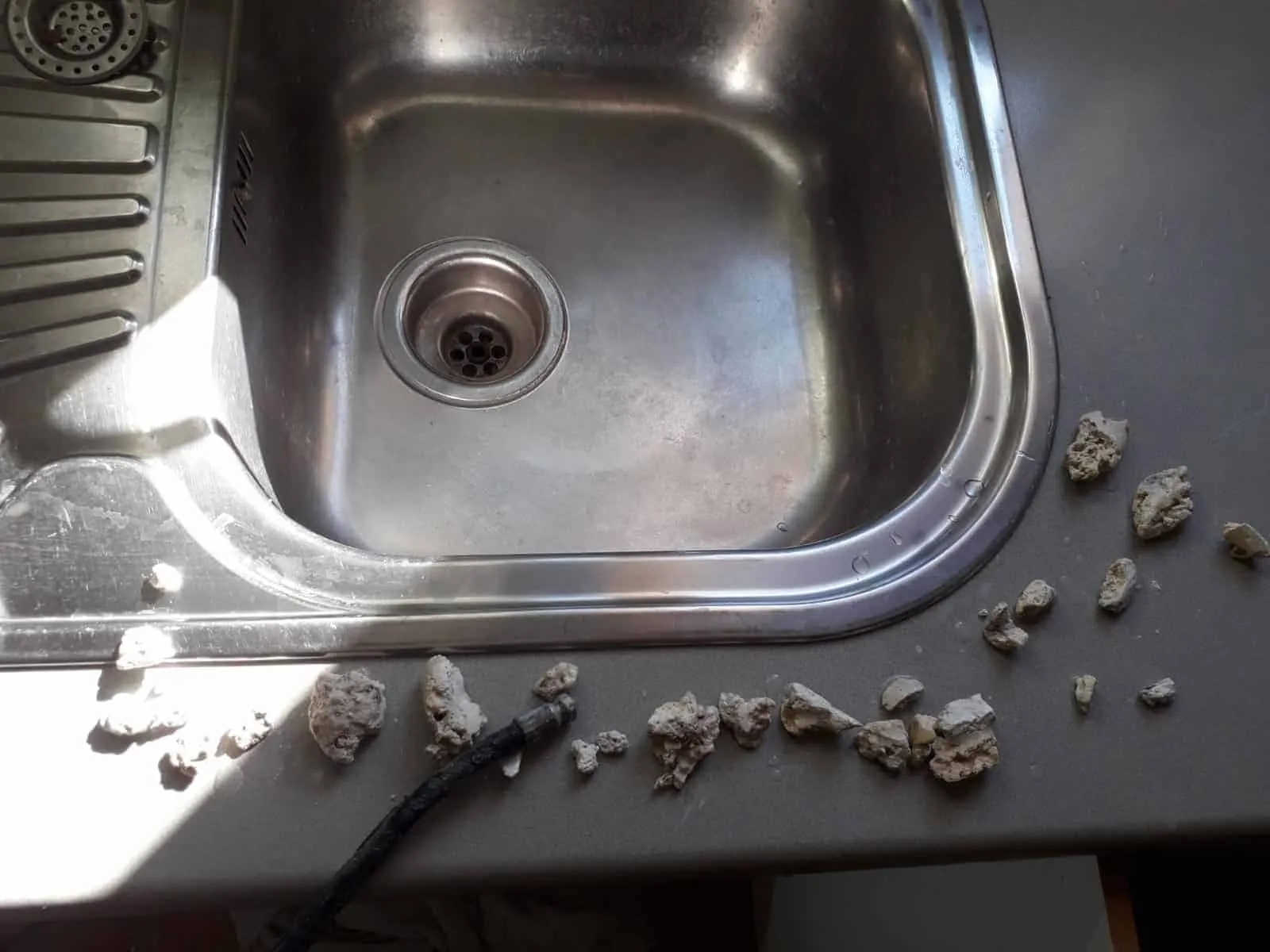
If there's one thing everyone living on the island recognises, it's limescale. Much of Mallorca's water comes from aquifers in limestone ground, which means hard water with a lot of dissolved calcium. It isn't generally considered a health issue, but it is an issue for the plumbing: the white marks on shower screens and taps are only the visible part. Inside, limescale builds up in aerators, shower heads, water heaters and boilers and, over the years, in the pipes themselves.
In older galvanised iron installations, common in many old buildings in Palma and in the historic centres of the island's towns, limescale adds to corrosion and gradually narrows the pipe until pressure drops and the water runs cloudy after a few days without use. Water softeners and household filters help, but they need maintenance of their own: a cartridge that never gets changed or a softener that doesn't regenerate properly can end up making worse the very water it was meant to improve.
Homes and estates off the mains network
The situation is different for homes and rural properties not connected to the municipal network, particularly in inland rural areas of the island, where supply depends on private wells, rainwater-collecting cisterns, or delivery tankers. In these cases, responsibility for ensuring water quality falls largely on the owner, and tank maintenance, regular cistern cleaning, and, when appropriate, laboratory testing become essential rather than optional.
In practice, that comes down to some concrete habits. If your water arrives by tanker, ask the supplier to confirm it's fit for human consumption and make sure it goes into a clean tank, because even the best water spoils in a cistern with sludge on the bottom. If the cistern collects rainwater, whatever lands on the roof — dust, leaves, bird droppings — gets washed in, so gutters, inlet filters and lids need to be in good condition. And if your water comes from your own well, an occasional laboratory analysis is the only reliable way to know what's in it. Our guide to water quality in domestic cisterns covers these points in more detail.
From the meter to the tap: the part that's up to you
But even in homes connected to the municipal network, the quality of the water that finally reaches the glass doesn't depend solely on what happens before the meter. Interior pipework in poor condition, with limescale build-up, corrosion, or partially blocked sections, can alter the taste, colour, or even the safety of the water between the point it enters the home and the tap. Likewise, a poorly maintained household or shared tank can introduce contamination into water that arrived in perfect condition from the municipal network. That's why talking about water quality in Mallorca can't stop at the source — aquifers or desalination — it also has to include the state of home installations: well-maintained pipes, tanks, and cisterns are the last link, and probably the most overlooked one, in the chain that ensures the water coming out of the tap is genuinely safe.
Signs that something is wrong with your installation
Some symptoms point to the plumbing inside the house rather than to the water source. Brown or reddish water when you first turn on the tap in the morning, or after a few days away, usually means corrosion in metal pipes. A rotten-egg smell that only appears with hot water points to the water heater rather than the mains. White particles in filters and aerators are loose limescale, and a loss of pressure at a single tap is usually a local blockage. If the problem shows up throughout the house and in the cold water too, suspicion shifts to the tank or the supply connection.
What to do depends on the case. In second homes that have been shut for months, the first step is to run every tap for a few minutes before using the water. If the symptom persists, the storage should be checked, whether that's a cistern or the building's water tank, and if there's any doubt about whether the water is drinkable, have it analysed by a laboratory before drinking it. At Tuberías y Aljibes we work all over Mallorca cleaning cisterns and tanks, inspecting pipes with cameras and locating leaks; you can reach us on 695 787 366.
Frequently asked questions
Can you drink the tap water in Mallorca?
In most urban areas on the mains network, the water is subject to the controls of Real Decreto 3/2023 and is fit to drink. Whether you like its taste or hardness is another matter, which is why many households use filters. What's worth keeping an eye on is the condition of the pipes and tanks inside the property, which is where water can deteriorate.
Is limescale in the water harmful?
Hard water isn't generally considered a health problem; its effect shows up mainly in the plumbing. Limescale shortens the life of water heaters, taps and appliances and, over the years, narrows older pipes, which means lower pressure and more breakdowns.
How often should water from a cistern or well be tested?
There's no single rule, because it depends on where the water comes from and how it's used. It's a good idea after a cleaning, whenever the taste, smell or colour changes, and at regular intervals if the water is used for drinking. The analysis should always be done by a laboratory.
What should I do if the water runs cloudy when I get back from holiday?
Run all the taps for a few minutes. If it clears, it was sediment or rust that built up in the pipes while they weren't in use; if it doesn't clear or keeps happening, the tank and the installation should be checked. In tanks where water sits still in the heat, it's also worth reading about Legionella in water tanks.
Related services
Where we work
Keep reading
24h emergency unblocking
Emergency: +34 695 787 366